For families
You can see they’re stuck. You can’t see why.
Usually the reason is one small idea underneath. RodriMath finds it, teaches it a new way, and tells you in plain words.
- Free for 30 days
- No card
- Cancel in one press
- Nothing to install
Your child needs only a first name, a username and a PIN. See prices


What changes
After a few sessions, you will know what is underneath.
No score to decode. Here is what you get, and when.
- Tonight
About ten minutes, on their own
A short start that adapts finds where they are. Some questions are too hard on purpose.
- After the first sessions
One line that answers you
What they are working on, good at, and finding harder. In words, not a score.
- Whenever you look
One thing that helps at home
A ten-minute idea for the table, or the honest answer that this one needs their teacher.
- Weeks later
Whether it stuck
It checks again, quietly, inside ordinary practice. Mastered means still there.
What is my child working on right now?
One line, in words: Working on right now: Tens and ones. Under it, what they are strong at and one thing that helps at home.
Time is shown too, labelled a fact, not a target.
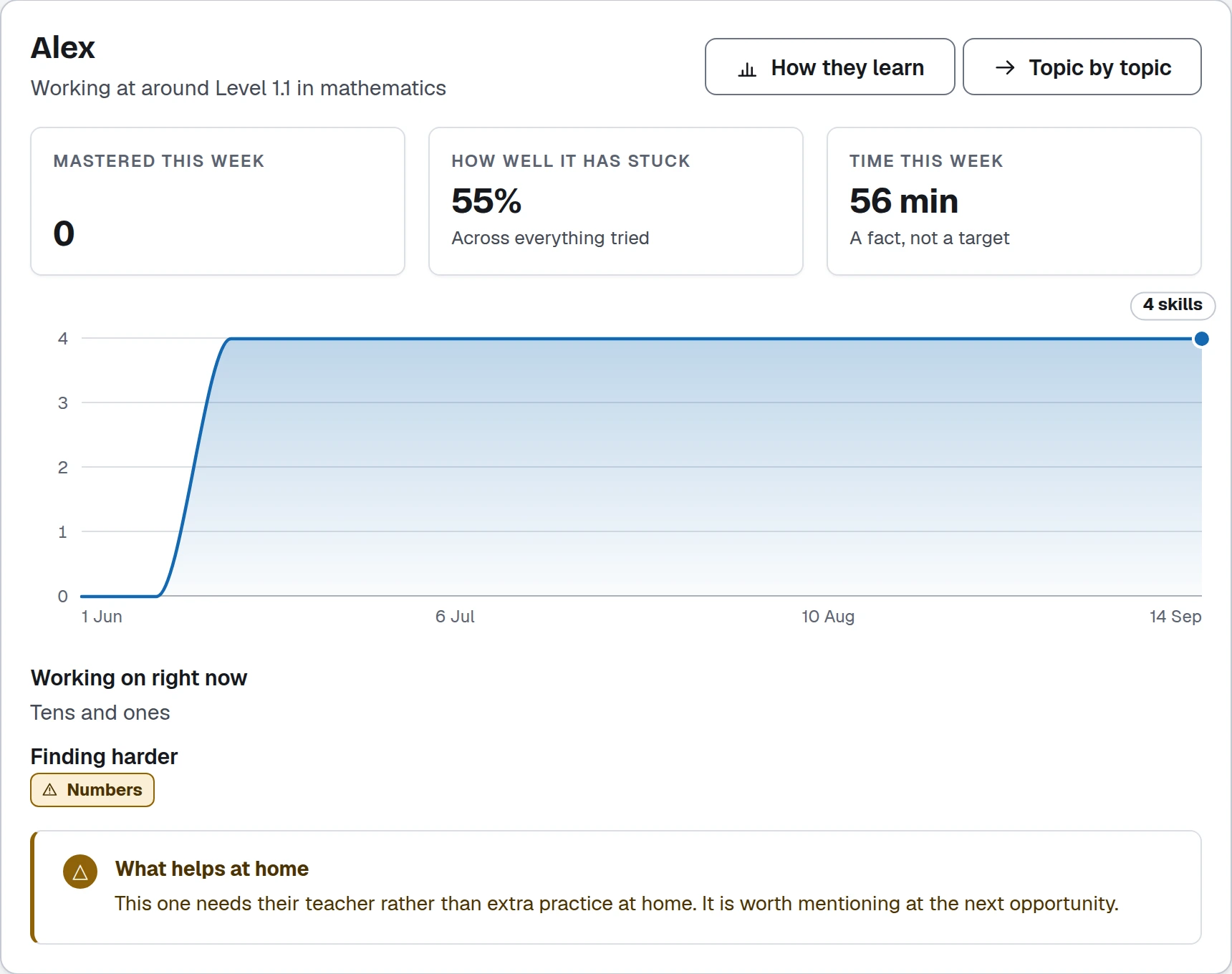
Alex’s card, the week the engine found the gap. 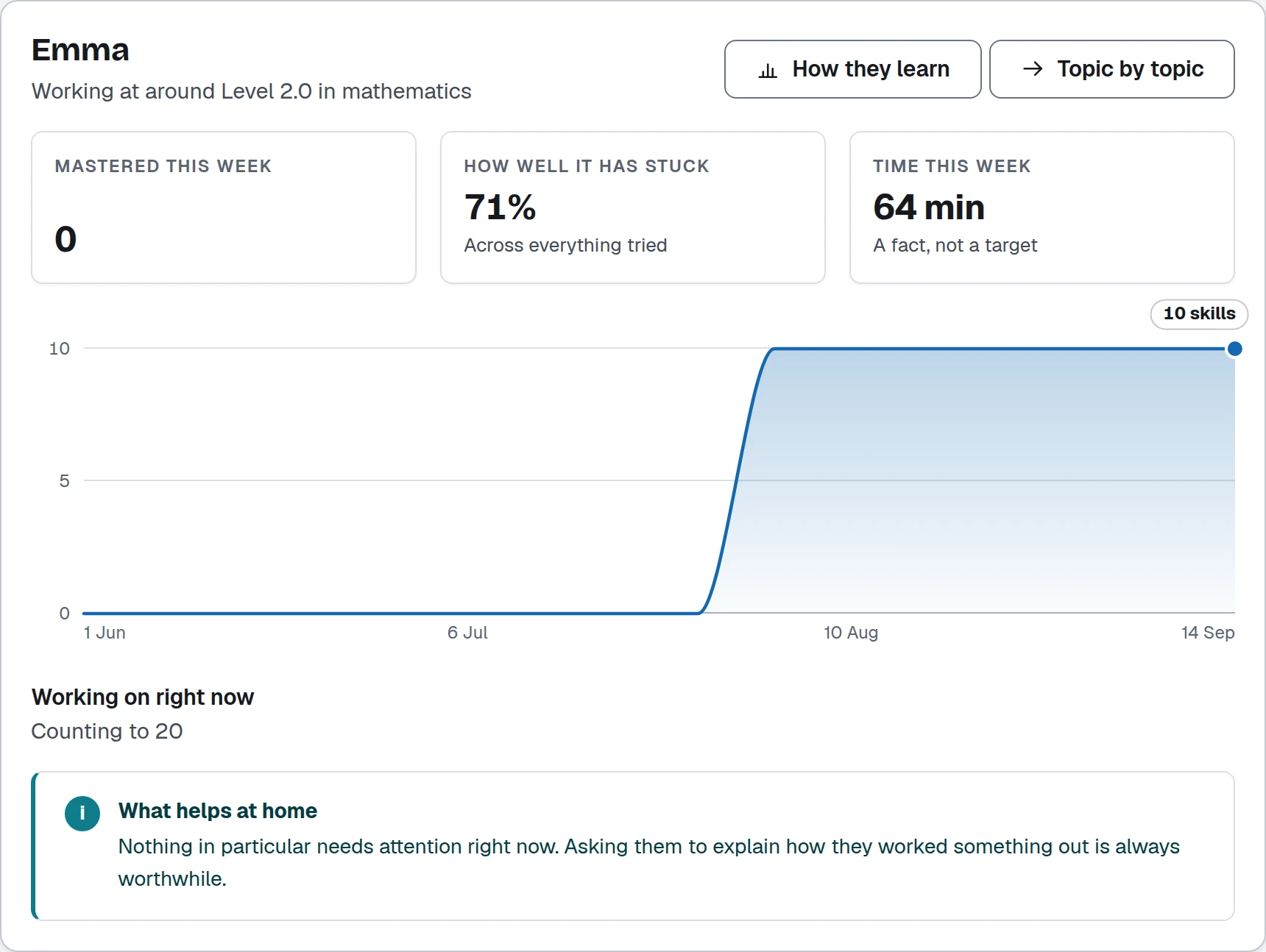
The same card for a child who is doing fine. It says so. Why is it teaching my second-grader first-grade things?
Because that is where the difficulty is. A child who finds two-digit adding hard is usually missing something underneath it, so RodriMath teaches that first.
The page says so each time, with what your child currently believes, in their own words.
Why it went back a step
- Adding two-digit numbersLooks like the problem
- Tens and onesIs the problem
- Reading and writing numbers to 100Checked first, then taught if needed
What looks like trouble with adding is usually something underneath. RodriMath teaches that first. 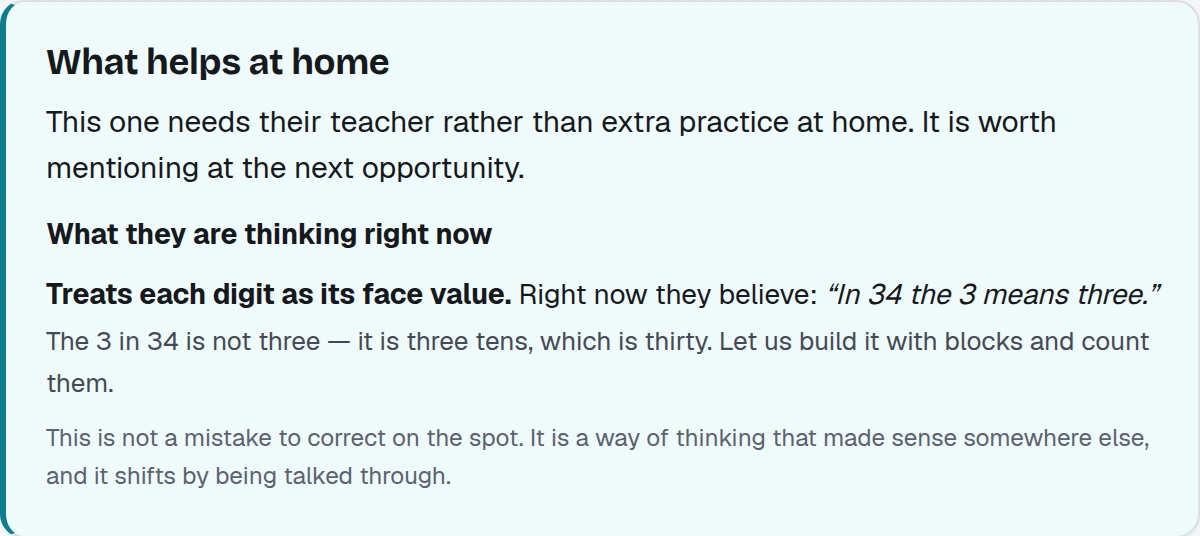
Their thinking, in their words. What do I actually do at home?
Whatever helps this week. One of three:
- A ten-minute activity for the kitchen table, with what you need and what to watch for.
- Nothing in particular. Ask them to explain how they worked something out.
- Their teacher, when this one needs teaching rather than more practice. It says so rather than hand you a worksheet.
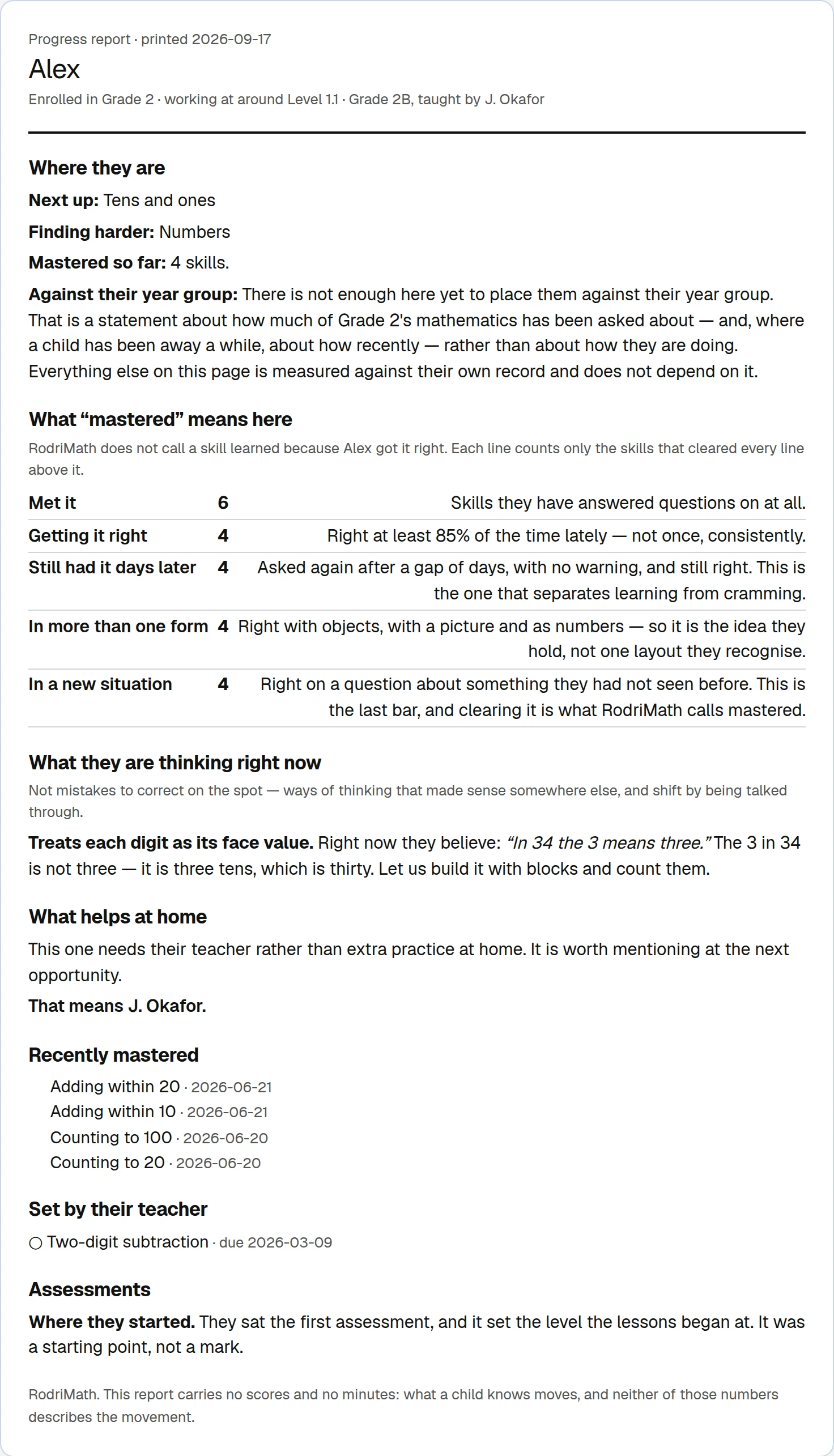
The printable one-pager, for a parents’ evening.
You were right that something was underneath
Find out what it is.
You don’t need to be a math person. You need the one thing to help with.
- Free for 30 days
- No card
- Cancel in one press
- Nothing to install
What does my child actually see?
A world of their own, drawn for their age: big things to count in Kindergarten, something closer to a real game by Grade 5. The same engine underneath.
Lessons go from objects to pictures to symbols. When they are stuck, the picture changes, not the question. No lesson, check or test is timed.
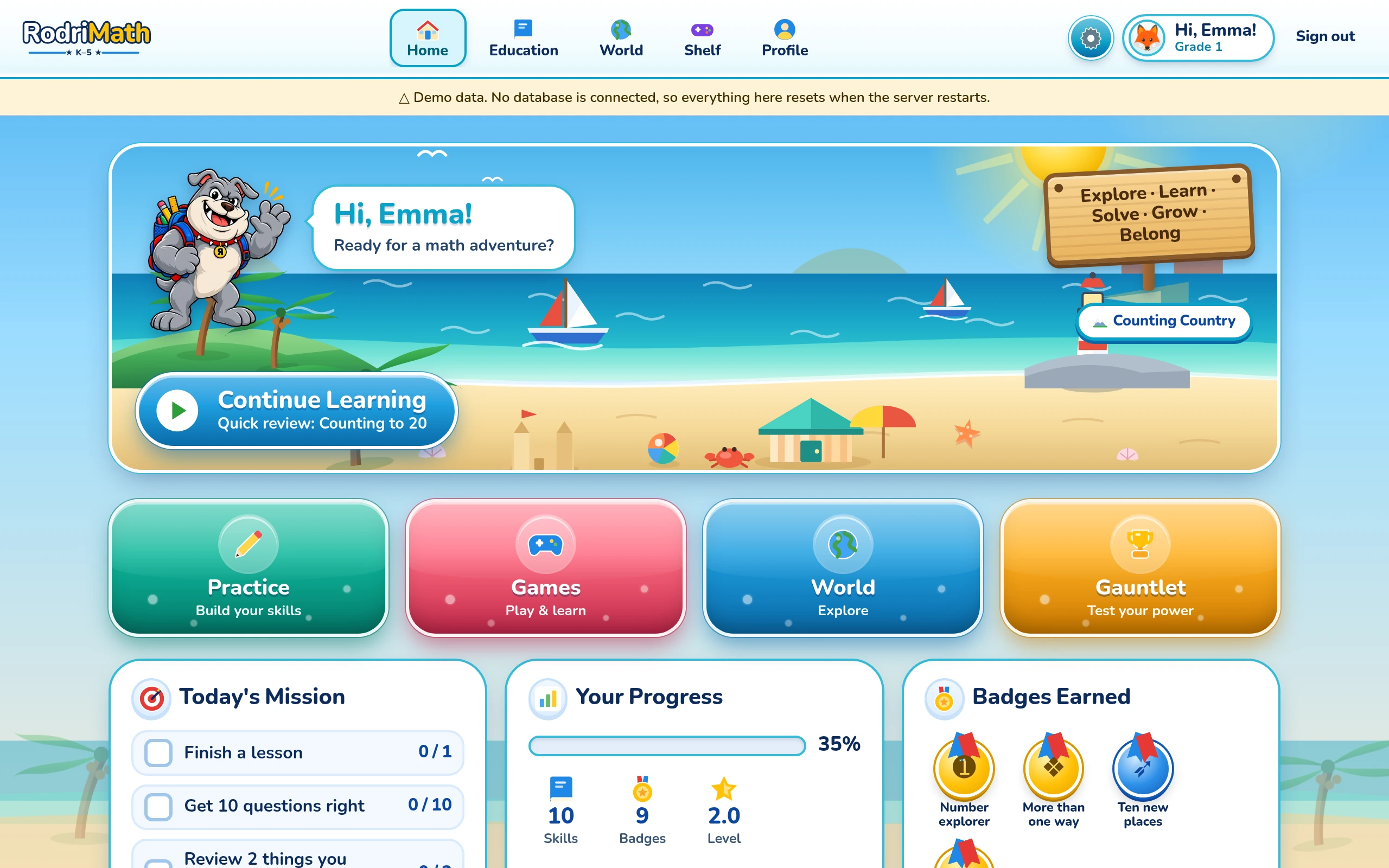
Grade 1. The board a child sees. 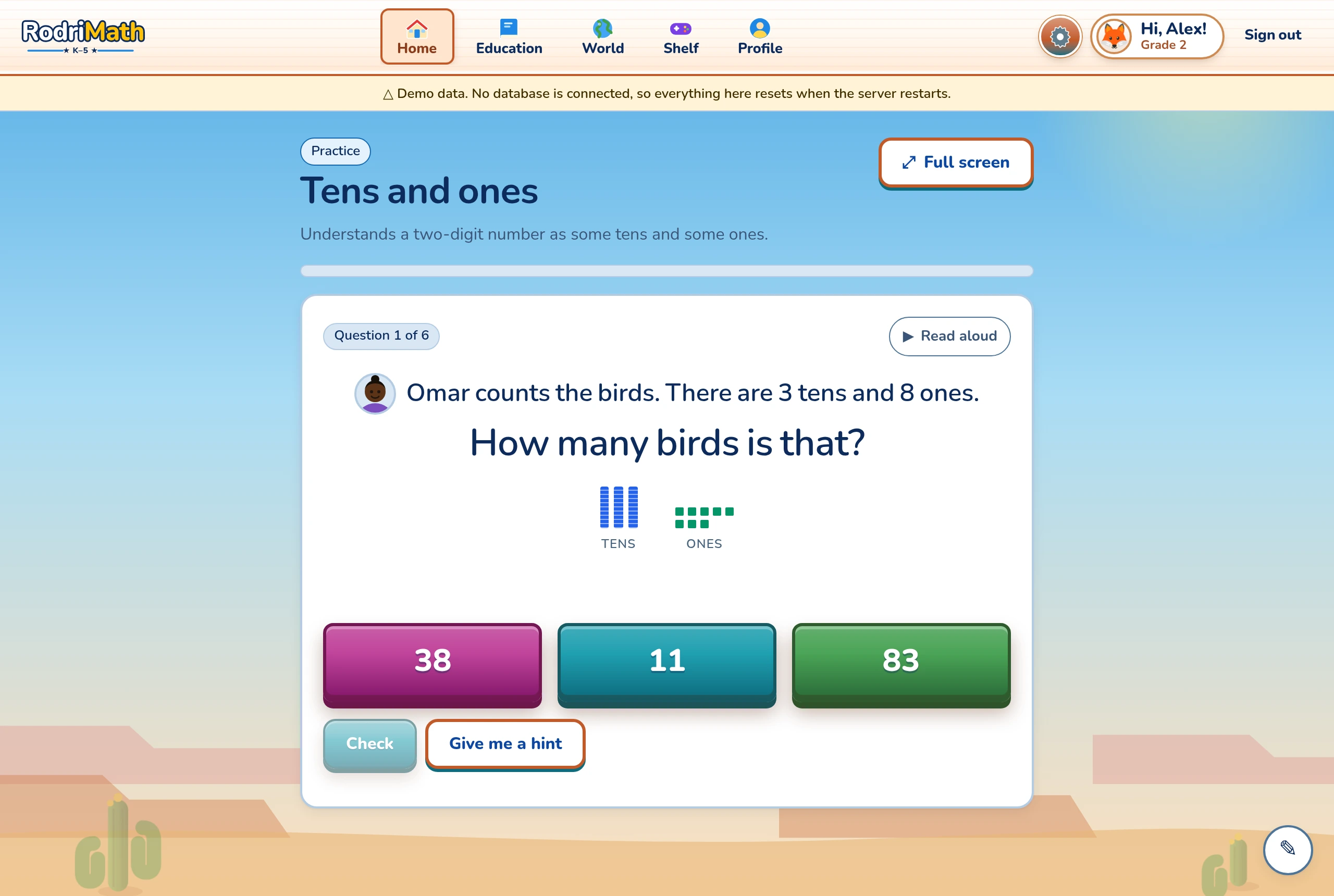
Practice, with the blocks drawn. Is my child behind?
Their page answers in one sentence, against their year group:
- Ahead of where their grade usually is by now
- About there
- A little behind: a normal place to be, and the gap the lessons are working on right now
- Working below: where the lessons start, not a verdict
Until it has seen enough to say, it tells you so rather than guessing.
Did it stick, or did they just get it right once?
One good day is not mastery. It comes back later and checks, quietly, inside ordinary practice. Mastered means all five:
- Right now
- Still there later
- More than one way
- Somewhere new
- No wrong idea left underneath
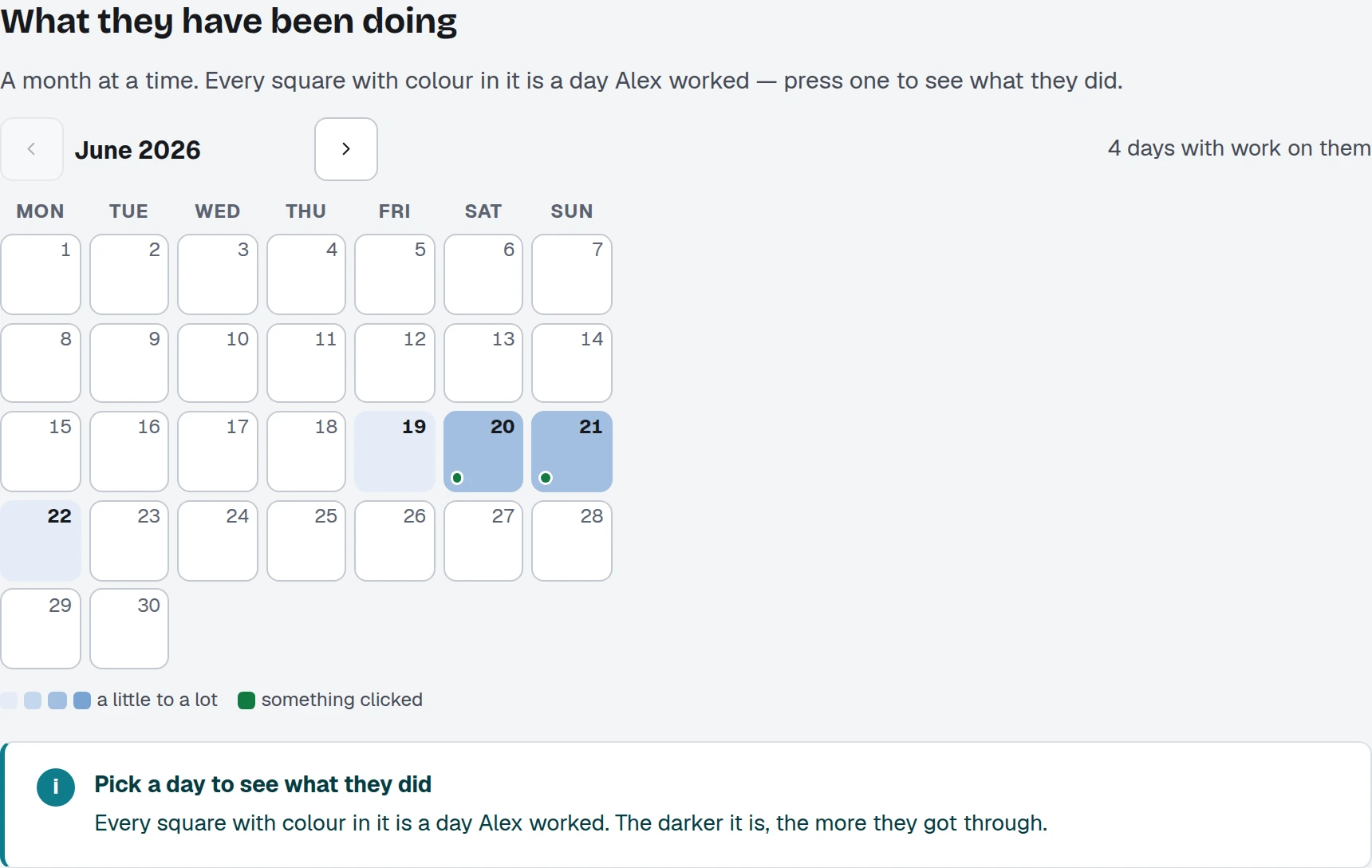
The days they worked. Coming back to something is the product checking it stuck. Will it nag my kid? Will it nag me?
No. There is:
- No streak that punishes a missed day, and no points to lose
- No leaderboard, and no timed lesson, check or test — a few games have a clock for fun, and “No rush” takes it away
- No character that gets sad when they have been away
You get a short weekly note, only when something happened. A quiet week sends nothing.
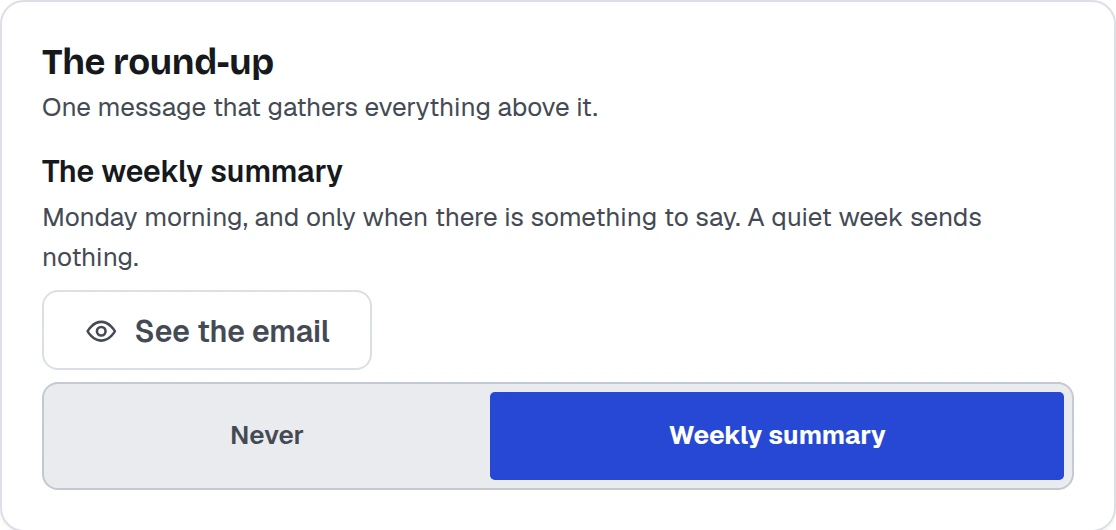
What reaches you. Yours to switch, and to read before it is ever sent.
What it knows about your child
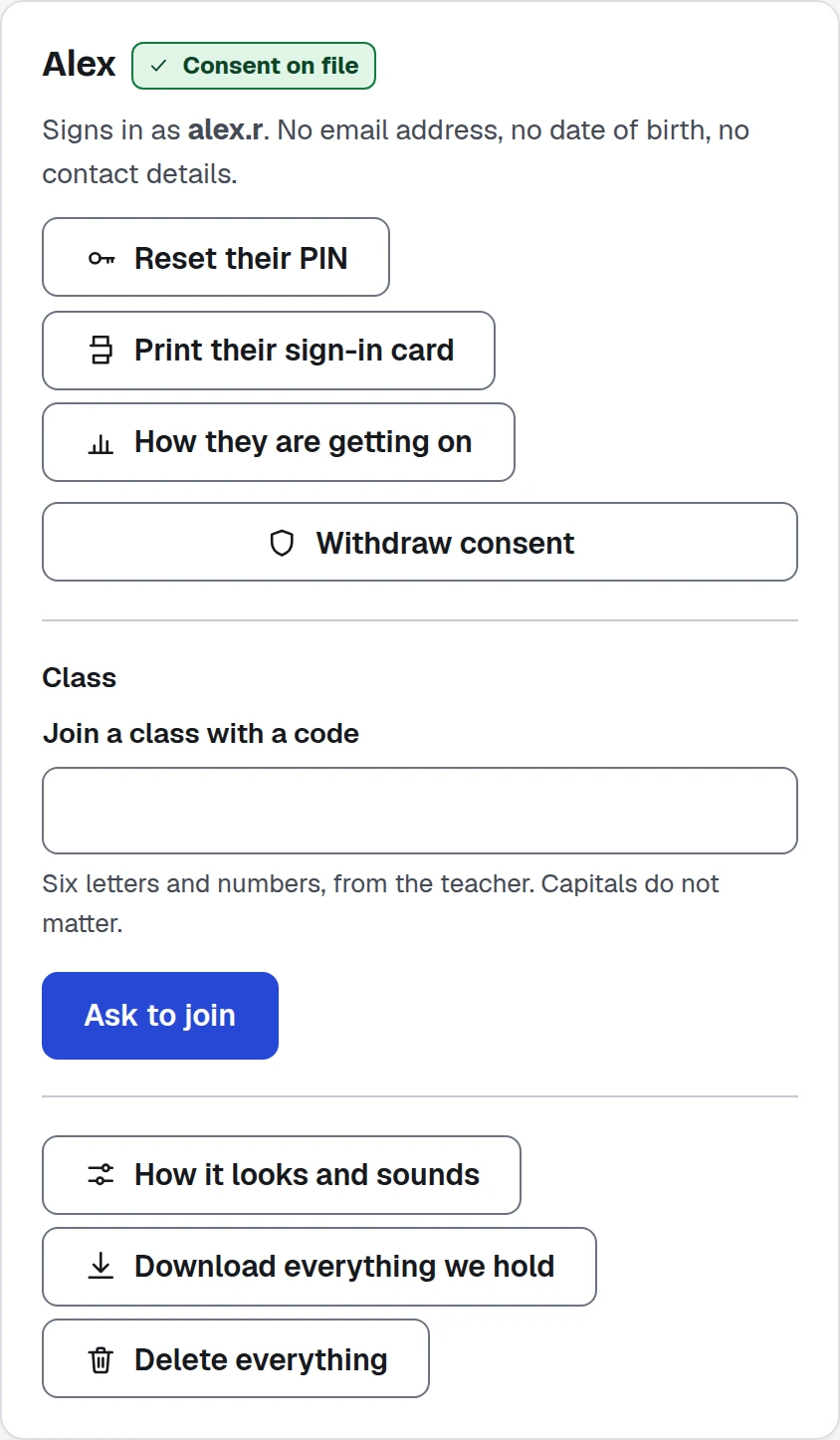
A first name, a username, a PIN, a year group, their world and their work.
- No contact details. No email, date of birth or location, and nowhere to put one.
- Download it all as a file, from your account page.
- Delete it all the same way. A button, not a request.
The whole of it, in plain words, on the privacy page.
What it costs
See what it finds before you pay anything.
30 days free, no card
Long enough to see what it finds before you decide.
$99 a year for the first child
$59 a year for the second and third child, and nothing for the fourth or any after, or monthly. Two adults included. A paid year is refundable for 30 days.
If their school pays, you don’t have to
A child on a paying school’s roster is covered and need not be on your plan; your bill changes only when you say so. Ask the teacher for the class code.
How it starts
Ten minutes tonight.
Make the account, add your child, and let the first session be theirs.
Create your account
Your name, your email address and a password — and a family name, if you like. Adult accounts are free, and 2 are included.
Add your child
A name, a username and a PIN. No email address, and nowhere to put one. Your 30 days free start here, and we do not ask for a card.
They start
A short set of questions finds where to begin, then the lessons follow from it.
Choose a plan
$99 a year for the first child, $59 a year for the second and third child, and nothing for the fourth or any after, or monthly. A plan keeps them going after the free days; nothing they have made is ever deleted if it lapses.
- Free for 30 days
- No card
- Cancel in one press
- Nothing to install
Let them answer the first session alone. Some questions are too hard on purpose: that is how it finds the right place to start.